
Quick Summary
Clogged exhaust lines create dangerous residential fire hazards and spike energy bills, making professional dryer vent cleaning in Carrollwood essential for restoring appliance efficiency and home safety. Premier Air Duct Cleaning Service Tampa resolves these hazards through owner-operated rotary brush scrubbing, HEPA extraction, and digital airflow verification without hidden fees or bait-and-switch pricing. Readers will learn how to identify critical duct blockages and can easily schedule a professional dryer vent inspection or call for a free estimate with same-day availability in Carrollwood.
Dryer Vent Cleaning in Carrollwood – Fast Fire-Safe Results
If your dryer takes two or three cycles to finish a single load of towels, or if your laundry room feels like a sauna every time the machine runs, your exhaust line is likely choked with lint. Premier Air Duct Cleaning Service Tampa provides direct, owner-operated dryer vent cleaning in Carrollwood to eliminate fire hazards, lower utility bills, and restore normal drying times. We do not use subcontractors or teaser pricing. Owner Matthew Gonzalez personally handles every inspection and cleaning using high-torque rotary brush systems and HEPA extraction.[4]
According to national fire safety records from the National Fire Protection Association (NFPA), clothes dryers cause an estimated 15,970 home structure fires each year in the United States, with accumulated lint serving as the ignition source in 26% of those cases. We clear the entire run, verify airflow with digital meters, and make sure your vent line exhausts safely outside.[1]
Quick Answer: What Homeowners Should Know
Need dryer vent cleaning in Carrollwood?
We’re available now — call for a fast, free estimate.
At a glance: Professional dryer vent cleaning costs an estimated $80 to $200 and typically takes an estimated 45 to 90 minutes. Industry safety standards recommend professional cleaning every 12 months. When exhaust lines run long distances through attic spaces, warm, humid exhaust air can cause loose lint to accumulate and compact over time, which standard DIY vacuum attachments cannot easily dislodge. According to Premier Air Duct Cleaning Service Tampa, professional rotary brushing clears the line completely and helps eliminate dangerous fire hazards.[5]
Immediate Pricing and Service Expectations
When you book an appointment, expect an upfront quote with no hidden access fees. A standard residential visit takes an estimated 45 to 90 minutes and includes a complete inspection, rotary mechanical cleaning along the entire duct length, lint trap housing clearing, and a post-service airflow measurement.
What Does Dryer Vent Cleaning Cost?
Professional dryer vent cleaning typically ranges from an estimated $80 to $200 for standard residential systems. The exact price depends on duct length, whether the line exhausts through a side wall or a steep roofline, and the severity of the lint buildup. We provide a clear, flat quote before any work starts.
Estimated Pricing Breakdown for Residential Ventilation Services
To help you compare standard rates and plan your home maintenance, here is an estimated cost breakdown for ventilation services:
| Service Type | Estimated Cost Range | What Is Included |
|---|---|---|
| Standard Dryer Vent Cleaning | $80 – $200 | Mechanical rotary scrubbing, lint trap cleanout, airflow anemometer test |
| Single-System Air Duct Cleaning | $300 – $500 | Supply and return plenum scrub, register cleaning, negative air HEPA capture |
| Whole-Home Air System Sanitizing | $100 – $200 | EPA-registered botanical fogging for mold and odor control |
| Dual-System / Multi-Run Cleaning | $550 – $900 | Multi-unit duct sanitization, multiple exhaust lines, full camera verification |
Factors That Influence Your Final Estimate
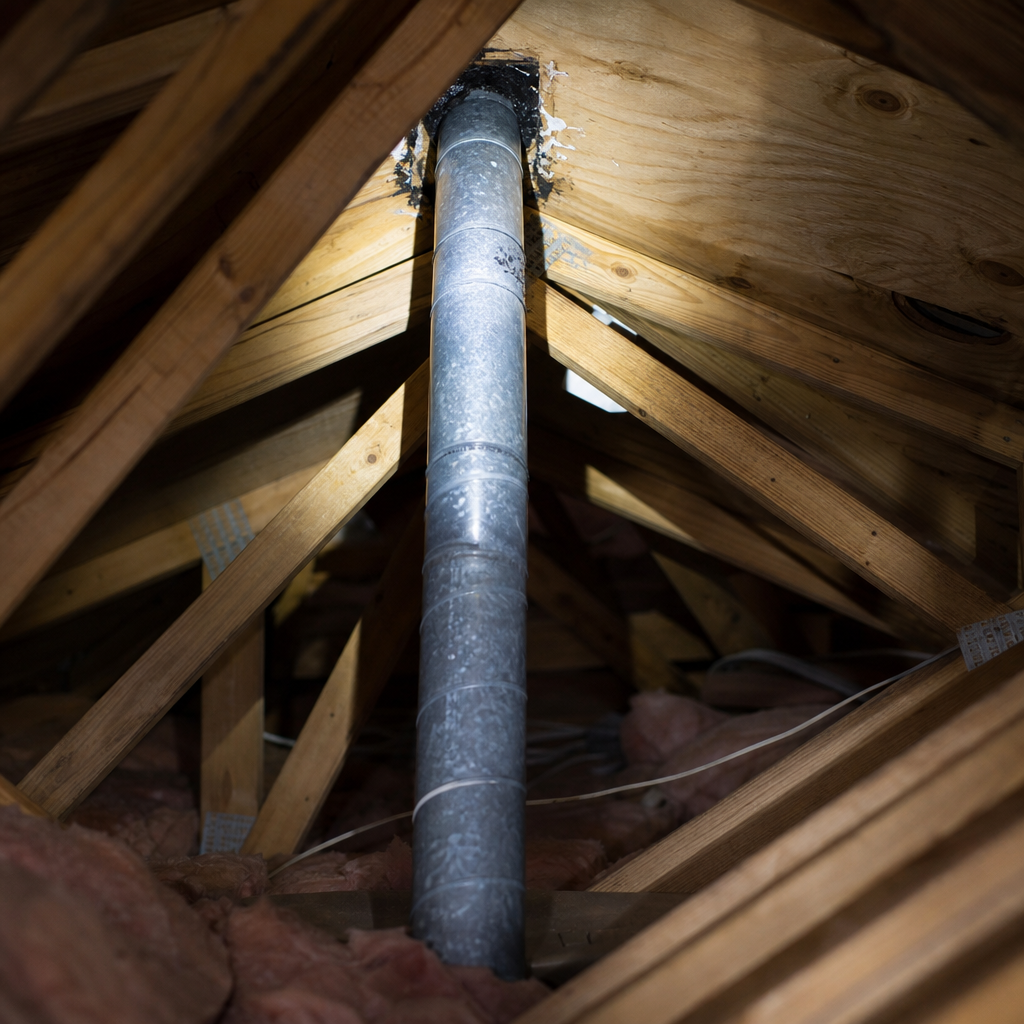
Homes with laundry rooms located near the center of the house often require the dryer duct to run vertically through the ceiling and across an attic before exiting through the roof. These longer, more complex paths require more time and specialized equipment than a short, straight-through-the-wall vent.
Four primary factors determine your service cost:
- Duct run length: A 25-foot attic run requires multiple flexible rod extensions and extended rotary scrub time compared to a 4-foot wall exit.
- Exit location: Roof caps require ladder work, fall-protection measures, and roofline vent hood maintenance.
- Inline booster fans: Long runs with secondary booster fans require manual housing disassembly and motor cleaning.
- Transition duct condition: Replacing crushed, thin foil flex lines with fire-safe, semi-rigid aluminum ducting.
Be cautious of “$49 to $99 whole-house” flyers. Many budget handymen use light shop vacuums that only pull loose lint from the first few feet, leaving deep duct blockages untouched before adding unexpected fees for roof access. According to the U.S. Fire Administration (USFA), failure to clean dryer vents causes an estimated 2,900 residential building fires each year, accounting for roughly $35 million in property damage. Proper rotary cleaning protects your home from these avoidable risks.[2]
Why Do Attic-Routed Dryer Ducts Clog and Create Fire Hazards?
Need dryer vent cleaning in Carrollwood?
We’re available now — call for a fast, free estimate.
Attic-routed dryer ducts clog because long exhaust paths force hot, moisture-filled air through unconditioned attic spaces. When that moist exhaust passes through cooler or uninsulated sections of pipe, water vapor can condense. Dry lint absorbs this moisture, creating dense buildup that clings to interior duct walls and accumulates over time.
The Impact of Long and Complex Duct Layouts
Floor plans that place laundry closets in interior hallways, bathrooms, or garage entryways often require 4-inch metal or flexible ducting routed upward through ceiling joists, horizontally across attic spaces, and out through a roof jack.
During inspections, technicians from Premier Air Duct Cleaning Service Tampa frequently uncover sagging duct sections, loose tape joints, and pinched flex lines in attic spaces. Bends and sags create low points where damp lint collects, progressively restricting exhaust airflow and increasing heat buildup near the dryer’s heating element.
How Humidity and Long Runs Contribute to Lint Buildup
Standard nylon brush drill kits sold at hardware stores work best for short, straight duct runs. In humid conditions and long attic runs, lint can become sticky and dense, causing DIY sweep rods to pack lint into a tighter blockage deeper inside the pipe.
As blockage narrows the exhaust passage, the dryer motor strains and the heating element runs hotter and longer. The Consumer Product Safety Commission (CPSC) estimates that clothes dryers cause roughly 15,500 fires and over $84 million in property damage annually nationwide. Clearing dense lint buildup requires professional-grade rotary equipment designed to clear the entire line safely without damaging duct joints.[3]
Warning Signs of a Blocked Dryer Vent
If you notice any of the following signs, your dryer exhaust system needs attention:
- Longer drying times: Regular loads of clothing or bedding require two or more full cycles to dry.
- Overheated laundry room: The utility space feels hot and humid, and the top or sides of the dryer are uncomfortably hot to the touch.
- Burning odor: You smell hot lint or a slight scorched smell while the dryer is running.
- No outside airflow: The exterior wall flapper or roof damper does not open when the dryer turns on, or lint is visibly spilling out around the hood.
What Is Included in a Professional Dryer Duct Cleaning Service?
A professional cleaning removes lint and obstructions from the entire exhaust pathway, from the internal lint trap housing behind the drum all the way to the exterior roof or wall cap. It also verifies that your dryer exhausts at safe airflow speeds before service is complete.
| Service Step | DIY Drill Kits | Basic Handyman Vacuuming | Owner-Operated Pro Service |
|---|---|---|---|
| Dense Attic Lint Removal | May push lint deeper | Cleans first few feet only | Full-run rotary scrubbing |
| Lint Trap Housing Disassembly | Skipped | Skipped | Vacuumed and cleared deep |
| Airflow Anemometer Testing | None | None | Pre- and post-cleaning verification |
| Roof Cap & Guard Inspection | Rarely checked | Visual check only | Cleaned, cleared, and checked |
Mechanical Rotary Brushing and HEPA Extraction
To clear out dense, trapped lint without damaging ductwork, we use specialized rotary cleaning systems. Owner Matthew Gonzalez follows a four-step process on every home:
- Cabinet and transition cleaning: We disconnect the dryer, clear the internal lint trap housing where combustible fibers collect near the element, and inspect the transition hose for kinks.
- Full-length rotary scrubbing: We feed flexible, high-torque rotary brushes through the entire duct run. The rotating bristles scrub the inner metal walls clean from end to end.
- Negative pressure HEPA extraction: As the brush breaks up the lint, a high-velocity vacuum with HEPA filtration captures debris to prevent dust and allergens from entering your living space.
- Joint and damper inspection: We check accessible duct joints along the run to make sure connections are secure and intact.
Exterior Vent Hood and Pest Guard Maintenance
Outside your home, the exhaust hood must open freely while the dryer runs and seal shut when it stops. We remove lint buildup from the exterior damper and inspect bird and rodent guards. Pests such as wasps, birds, and squirrels can build nests inside open exhaust vents. We make sure your exterior cap is clear of lint, fully functional, and protected by durable, corrosion-resistant mesh that keeps pests out without trapping lint.
Airflow Velocity Verification
We do not guess whether a line is clear. We measure exhaust velocity before and after the cleaning using a digital anemometer. Comparing these numbers confirms that backpressure has been removed and that your dryer can exhaust properly, helping your clothes dry efficiently.
Frequently Asked Questions
How much does dryer vent cleaning cost?
Standard residential service ranges between an estimated $80 and $200. Pricing depends on duct length, roofline accessibility, and the amount of lint buildup inside the line. We provide clear, flat-rate pricing with free estimates.
How often should you have your dryer vent professionally cleaned?
Industry guidelines and Premier Air Duct Cleaning Service Tampa recommend that homes have their dryer vents professionally cleaned once every 12 months. For households with high laundry volume or systems with long, attic-routed duct runs, scheduling cleaning every 6 to 9 months can be considered as a helpful general precaution to maintain optimal airflow.
How long does a professional dryer vent cleaning appointment take?
A standard appointment takes an estimated 45 to 90 minutes. That provides sufficient time to clean the internal lint housing, run the mechanical rotary brush through the entire duct run, clear the exterior vent cap, and test post-service airflow.
Can a clogged dryer vent increase energy usage and create fire hazards?
Yes. Restricted exhaust lines trap intense heat around the dryer motor and heating element, creating a major fire risk. Clogged vents also force dryers to run longer cycles to dry clothing, leading to inefficient operation and added wear on the appliance.
What is included in a dryer vent cleaning service?
Our service includes full mechanical rotary brushing of the entire duct run, lint trap cabinet vacuuming, roof or wall cap cleaning, transition duct inspection, and digital airflow testing before and after the job.
If your dryer is running hot or taking too long to finish a load, contact Premier Air Duct Cleaning Service Tampa today for reliable dryer vent cleaning in Carrollwood.
Need dryer vent cleaning in Carrollwood?
We’re available now — call for a fast, free estimate.
Sources
- Clothes Dryer Fires in Residential Buildings (2008-2010) – usfa.fema.gov (2010)
- Reducing property loss due to Dryer Fires in Streamwood – apps.usfa.fema.gov (2012)
- [PDF] Clothes Dryers – Consumer Product Safety Commission – cpsc.gov
- Is ventilation duct cleaning useful? A review of the scientific … – pubmed.ncbi.nlm.nih.gov
- Dryer Vent and Air Duct Cleaning Statistics (2026) | RapidEye – rapideyeinspections.com (2026)
Dryer Vent Cleaning in Nearby Cities
We also serve the communities around Carrollwood:
- Dryer Vent Cleaning in Tampa
- Dryer Vent Cleaning in Brandon
- Dryer Vent Cleaning in Bloomingdale
- Dryer Vent Cleaning in Carrollwood Village
- Dryer Vent Cleaning in Cheval
- Dryer Vent Cleaning in Citrus Park
- Dryer Vent Cleaning in East Lake-Orient Park
- Dryer Vent Cleaning in Egypt Lake-Leto
Frequently Asked Questions
What happens if my dryer vent exits through the roof instead of a side wall?
Roof-terminated vents require specialized access to clear exterior damper hoods and remove dense lint that settles in vertical attic runs. Premier Air Duct Cleaning Service Tampa scrubs the full duct length and inspects roof caps to ensure complete clearance and pest-guard integrity.
Should I replace my flexible foil or plastic dryer transition hose?
Yes, thin foil and plastic hoses crush easily and trap lint, creating significant residential fire hazards. Premier Air Duct Cleaning Service Tampa inspects transition ducts during every Carrollwood visit and can upgrade your setup to durable, fire-safe semi-rigid aluminum.
How do technicians verify that a dryer vent is fully clear after cleaning?
Airflow velocity is measured before and after service using a digital anemometer at the exhaust termination point. Premier Air Duct Cleaning Service Tampa uses these readings to verify that backpressure is eliminated and normal exhaust velocity is fully restored.
About the author
 |
Marcus Avery Marcus Avery is a certified HVAC technician with over 15 years of experience in the Florida climate. He holds a degree in Environmental Science from the University of South Florida and specializes in indoor air quality optimization. Marcus leverages his technical background to provide actionable advice on home maintenance and energy efficiency for Tampa residents. |
Dusty vents or weak airflow at home?
We’re available now — call for a fast, free estimate.
Call Now - Free Estimate