
Honeywell Air Duct Cleaning in Gibsonton: A Homeowner’s Guide
Honeywell air filtration and UV purification systems do not eliminate the need for professional duct cleaning in Gibsonton homes. These devices treat the air passing through them, but they cannot remove accumulated debris, microbial growth, or construction residue from the interior walls of your ductwork, return plenums, or flex duct runs. If you’re weighing whether your Honeywell equipment replaces duct cleaning, it doesn’t — the two work together, and in our 14 years serving Gibsonton, we’ve found that misunderstanding this distinction is the single most expensive mistake homeowners make with their indoor air quality. For a free assessment of your system, call (833) 892-8799.
What Honeywell Filtration Actually Does — And Where It Stops
We respect Honeywell’s engineering. Their whole-home media filters, electronic air cleaners, and UV-C lamps are legitimate tools. But after fourteen years crawling through attics in Gibsonton neighborhoods from Bullfrog Creek to East Bay Lakes, we’ve learned that homeowners consistently overestimate what these devices can reach.
A Honeywell F100 or F300 media filter sits at your air handler and captures particles from recirculated air. A Honeywell UV system neutralizes biological growth on the evaporator coil and in the immediate plenum area. Here’s what neither can do:
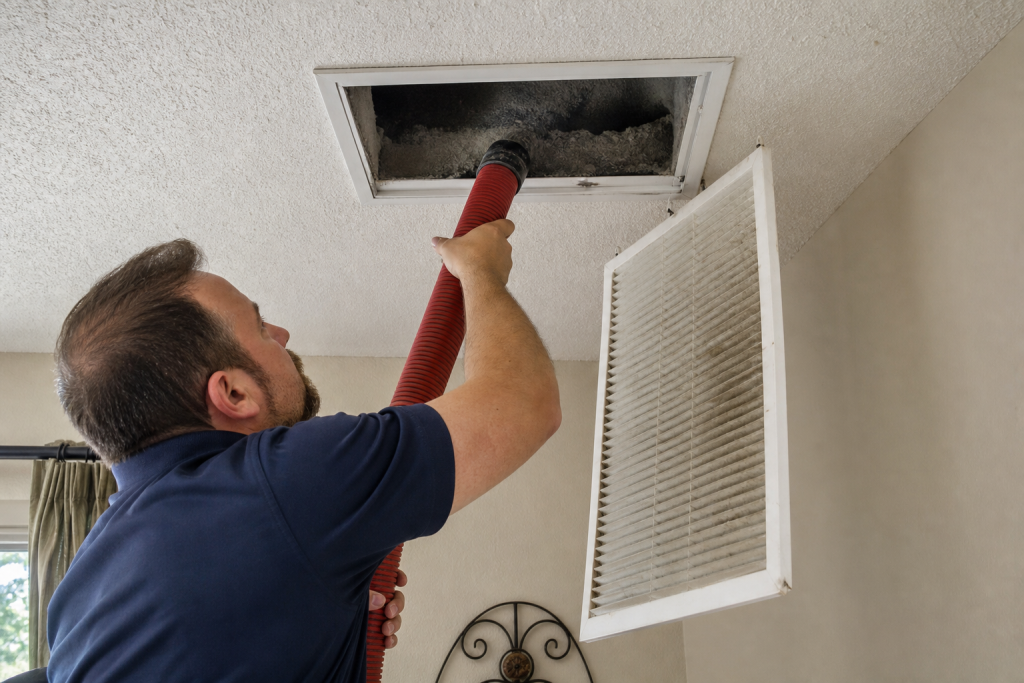
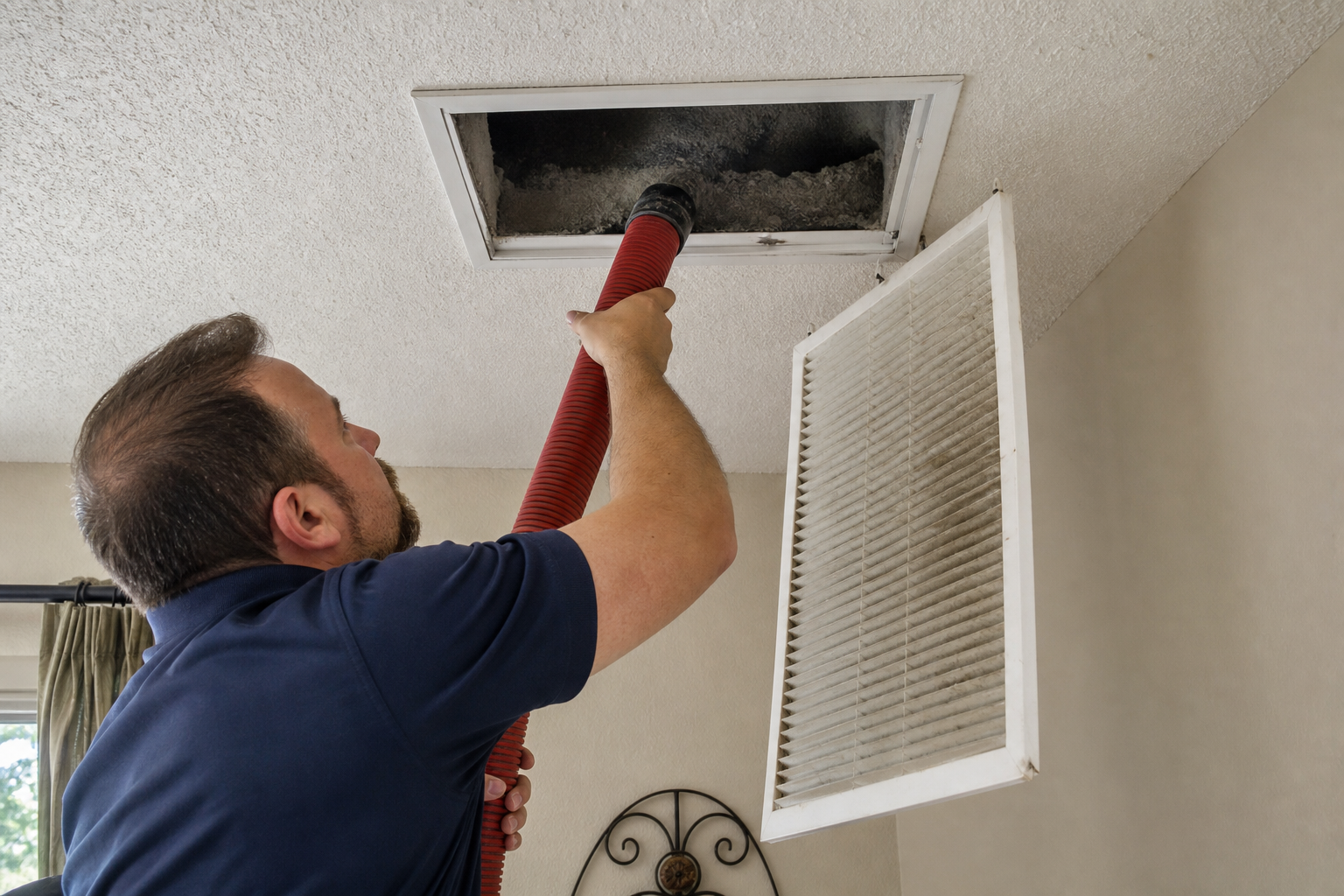
- Scrub the interior walls of galvanized ductwork where skin cells, cooking grease, and pet dander adhere over years
- Reach deep into flex duct runs — common in Gibsonton homes built from the 1980s through the mid-2000s — where debris settles in the corrugations
- Remove construction debris left by original builders (we’ve found drywall dust and insulation fragments in fifteen-year-old systems)
- Address microbial growth in the return air plenum, which sits upstream of most filtration
The owner is your technician — Matthew shows up on every job — and we’ve learned to ask specifically about Honeywell equipment during our pre-cleaning inspection. Not because it’s a problem, but because it changes how we sequence our work. A UV lamp, for instance, needs to be powered down before we introduce mechanical agitation tools like our Rotobrush system, then recalibrated afterward.
Why High-MERV Honeywell Filters Can Backfire in Older Gibsonton Systems
This is the conversation we have most often with homeowners in Gibsonton’s older subdivisions. You upgrade to a Honeywell MERV 13 or MERV 16 filter because you want cleaner air. Six months later, your energy bill climbs and your AC runs constantly.
Here’s what happened: many Gibsonton homes, particularly those built before 2010 with original duct systems, were designed for MERV 6 to MERV 8 resistance. The ductwork is often undersized by modern standards, with 6-inch flex runs serving multiple rooms and static pressure already at the edge of acceptable range. A high-MERV Honeywell filter adds significant pressure drop. Your blower motor works harder, airflow drops at the registers, and the system compensates by running longer cycles.
We measure this with a manometer during our HVAC Cleaning in Gibsonton assessments. If your static pressure reads above 0.5 inches water column with a high-MERV filter installed, we recommend either:
- Stepping down to a MERV 11 Honeywell filter with more frequent changes, or
- Upgrading to a 4- or 5-inch Honeywell media cabinet (F100 series) which provides more surface area and lower pressure drop at the same MERV rating
In Bullfrog Creek, we regularly see systems where a well-meaning filter upgrade has masked itself as an “AC problem.” The equipment isn’t failing — it’s suffocating.
The Correct Maintenance Schedule: Honeywell Components Plus Professional Duct Cleaning
Your Honeywell equipment and your ductwork need separate, coordinated maintenance schedules. Treating them as interchangeable is where costs compound.
Honeywell component maintenance (homeowner or HVAC technician):
- 1-inch pleated filters: every 60–90 days in Gibsonton’s pollen-heavy spring and summer
- 4-inch/5-inch media filters: every 6–12 months, but check at 6 months if you have pets or live near agricultural areas
- UV-C lamps: replacement every 9,000–12,000 hours (roughly annually — the lamp still glows when effectiveness has dropped)
- Electronic air cleaner cells: wash every 3–6 months
Professional duct cleaning (specialist with mechanical agitation and negative air equipment):
- Every 3–5 years for typical residential systems
- Every 2–3 years if you have pets, recent renovations, or occupants with respiratory sensitivities
- Immediately if you detect musty odors, visible mold, or significant dust emission from registers
We use Nikro and Abatement Technologies portable HEPA collection systems alongside our Rotobrush mechanical agitation tools. The negative air containment matters — without it, you’re just relocating debris. In our experience, Honeywell filtration works noticeably better after professional duct cleaning because the source of recontamination has been removed, not just filtered repeatedly.
Humidity, Installation Errors, and Honeywell Performance in Gibsonton’s Climate
Gibsonton sits in Hillsborough County’s coastal plain with average relative humidity hovering around 74% annually, spiking higher in summer months. This matters for Honeywell equipment more than most homeowners realize.
We’ve found three common installation issues that reduce Honeywell effectiveness in our local climate:
- UV lamp placement too distant from the coil: Honeywell specifies maximum effective distance for UV-C output. In humid climates, microbial growth is aggressive; a lamp mounted six inches farther than spec loses meaningful efficacy. We’ve seen lamps installed where the coil still shows biological staining because the intensity at that distance was insufficient.
- Media filter cabinets with poor bypass sealing: Gibsonton’s humidity swells filter media and can distort frames over time. If the cabinet door gasket is compressed or missing, unfiltered air bypasses the media entirely. We check for this during our pre-cleaning walkthrough — it’s a five-minute fix that changes everything.
- Electronic air cleaners wired to fan-only operation: Some installers wire Honeywell EACs to run whenever the blower operates, including fan-only mode. In humid climates, this can introduce moisture to the collection cells when cooling isn’t active, accelerating corrosion and reducing ionization efficiency.
We pulled a system in a garage over in East Bay Lakes last month where a DIY-installed Honeywell UV lamp was zip-tied to a flex duct joint — three feet from the coil, aimed at insulation. The homeowner had paid for protection they weren’t receiving. We repositioned it properly during our duct cleaning scope and showed them the before-and-after with a UV intensity meter.
How to Talk to Your Duct Cleaning Technician About Existing Honeywell Equipment
Not all duct cleaners know how to work around integrated air quality components. Here’s what to communicate before anyone opens your system:
- Exact Honeywell model numbers: F100, F300, UV100, etc. — this tells us power requirements, physical dimensions, and whether components need removal or protection during cleaning
- Installation date of UV lamps: If it’s been over a year, we recommend replacement timing in conjunction with duct cleaning so you’re not paying separate trip charges
- Whether your system uses a bypass humidifier: Honeywell HE series humidifiers share plenum space and need isolation during negative air procedures
- Any recent filter changes or pressure issues: This helps us interpret our manometer readings and distinguish pre-existing problems from cleaning-related concerns
When Matthew arrives for a Air Duct Cleaning in Gibsonton estimate, we photograph your Honeywell components, note serial numbers, and build our work sequence around them. After fourteen years, we’ve cleaned systems with virtually every Honeywell configuration — including some the company no longer manufactures.
Related services in Gibsonton: If your system includes a Honeywell whole-home humidifier or you’re concerned about dryer vent airflow affecting overall HVAC efficiency, our Dryer Vent Cleaning in Gibsonton addresses the full ventilation picture.
When to Call a Pro
Call for an assessment — not necessarily a full cleaning — when you notice any of these: registers with visible debris accumulation, inconsistent airflow between rooms, musty odors when the system cycles, or a Honeywell filter that dirties faster than the manufacturer’s interval suggests. These symptoms indicate your filtration is working overtime because the duct system itself is the source.
We don’t sell Honeywell equipment, so our assessment is unconflicted. We’ll tell you if your existing filtration is adequate, if it’s fighting against dirty ducts, or if the real issue is system design that neither cleaning nor filtration can fully resolve.
Key Takeaways
- Honeywell filters and UV systems treat air, not duct surfaces — professional cleaning removes the accumulation that filtration cannot reach
- High-MERV Honeywell filters can restrict airflow in older Gibsonton duct systems; pressure testing reveals whether your system can handle the upgrade
- Maintenance schedules for Honeywell components and duct cleaning run on separate timelines — coordinate them, don’t substitute one for the other
- Gibsonton’s humidity amplifies installation errors; verify UV placement and filter cabinet sealing
- Tell your duct cleaning technician your exact Honeywell models before work begins — proper sequencing protects equipment and ensures thorough cleaning
The Bottom Line
Honeywell makes capable air quality equipment, but no filter or UV lamp replaces mechanical duct cleaning. In Gibsonton’s climate, with its humidity, pollen loads, and aging housing stock, the two approaches complement each other when properly coordinated. We’ve spent fourteen years specializing exclusively in this trade — not as a side service, but as the sole focus — and we’ve learned that the homeowners with the cleanest air are the ones who understand where each tool fits.
From cleaning and sanitizing to repair and sealing — one company handles your entire duct system. If you’re in Gibsonton and want an honest assessment of how your Honeywell equipment and ductwork are working together, Premier Air Duct Cleaning Service Tampa home offers free estimates. Call (833) 892-8799 and Matthew will walk your system with you.
Frequently Asked Questions
No. A Honeywell whole-home air purifier filters or treats air as it passes through your HVAC system, but it cannot remove debris, mold, or construction residue from the interior surfaces of your ductwork, plenums, or flex runs. In Gibsonton homes, we’ve found that homeowners who rely solely on filtration often discover significant accumulation when they finally schedule professional cleaning — sometimes years overdue. Call (833) 892-8799 for a free duct inspection to see what’s actually inside your system.
Professional duct cleaning in Gibsonton typically ranges from $400 to $700 for a standard single-system home, with Honeywell components adding minimal complexity if properly communicated beforehand. UV lamp temporary removal and recalibration, or media filter cabinet access, may add 15–30 minutes to the scope but rarely affect pricing significantly. Exact quotes require a walkthrough — we measure duct runs, count registers, and identify access points. Call (833) 892-8799 for a free, no-pressure estimate.
We don’t recommend DIY duct cleaning for any homeowner, Honeywell equipment or not. Consumer-grade vacuums and brush kits lack the negative air containment and mechanical agitation to dislodge adhered debris without redistributing it into your living space. Additionally, Honeywell UV lamps operate at high voltage and require proper lockout procedures. Professional-grade Rotobrush and Nikro systems, combined with HEPA-contained negative air, are the standard for reason. The risk of damaging your ductwork or electrical components outweighs any perceived savings.
Replace your Honeywell UV lamp every 9,000 to 12,000 hours of operation — typically 12 months — regardless of duct cleaning schedule. Time the replacement to coincide with professional duct cleaning when possible, so your technician can verify proper positioning and intensity after the lamp change. In Gibsonton’s humid climate, we’ve seen lamps lose effective output before visible dimming occurs; annual replacement is preventive, not reactive. Call (833) 892-8799 to coordinate both services in a single visit.
Written by Matthew Gonzalez, Owner & Lead Technician at Premier Air Duct Cleaning Service Tampa, serving Gibsonton since 2012.
Need Air Duct Cleaning Help?
Call Premier Air Duct Cleaning Service Tampa — licensed & insured, here with fast after-hours help in Tampa.
(833) 892-8799